When I Became an “Aunty”
Delhi Afternoons
Growing up, I used to see the aunties of my colony sitting under the hot Delhi sun, gathered in little circles as if the afternoon itself had been reserved for them. Plastic chairs dragged out of homes, dupattas pulled over their heads when the sun got too sharp, peeling peas and talking.
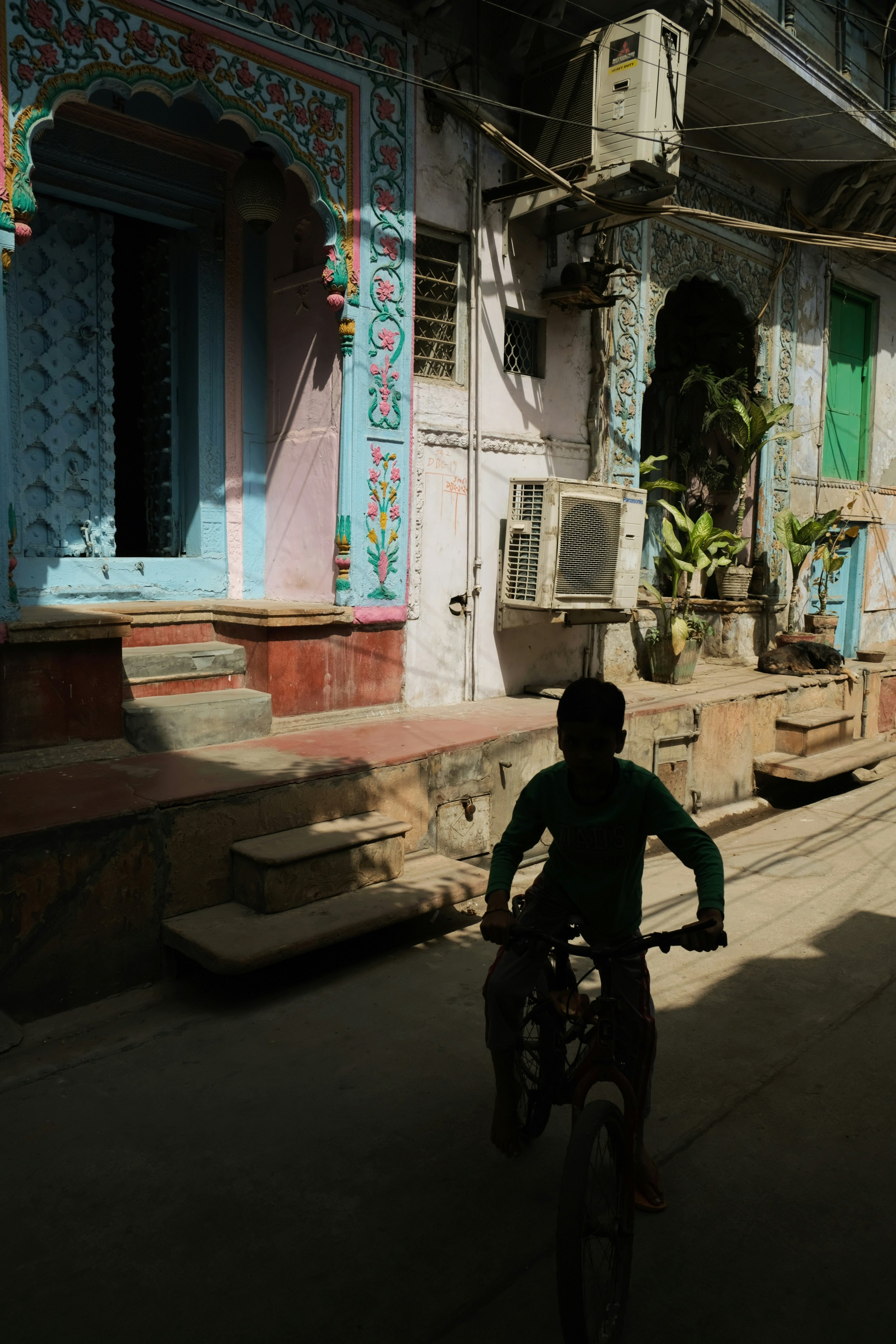
A neighbourhood afternoon in India. Photo: Ravi Sharma/Unsplash.
I remember them always being called gossip mongers. Not directly, maybe, but there was always that connotation. That these women had too much time, talked too much and knew too much about everyone else’s lives.
Looking back 20 years later, I wonder if it was really that. Or if it was just another patriarchal notion we had all learned to accept without questioning. Or maybe it was jealousy from people who wished they had a few minutes of that kind of peace — an afternoon nap, some peas to peel and the sweet nothings of a friend.
Either way, our country has a strange relationship with the word “aunty.” We use it as an insult so easily. Almost as if growing older as a woman is enough to make everything you have done before that less important.
And perhaps gossip itself has always been unfairly defined.
Because in Indian society, any exchange of information that men do not find useful somehow becomes gossip.
And looking from a distance, one might wonder: What are these women even talking about?
Maybe about what to cook for dinner that night. Maybe about how the neighbour’s girl was once again found coming home a little too late. Maybe about how Gupta ji was once again heard hitting his wife. Maybe about whether these homemakers should start a kitty because they never know when one of their drunk husbands is going to spend too much of the grocery money that month. Maybe about whose child needs a job and who knows someone who can help them get one.
Maybe that was gossip.
Or maybe that was just women trying to make each other’s lives a little easier.
What History Forgot to Call Work
Maybe that sounds like I am giving too much importance to a few plastic chairs on a Delhi afternoon.
But the further back you look, the harder it becomes to dismiss women sitting together as simply women sitting together.
Long before kitty parties had a name, before WhatsApp groups became the place where somebody always knew a doctor, a tutor, a lawyer or a cousin looking for work, women had already been building their own little networks — often from inside homes they were rarely encouraged to leave.
And sometimes, those networks were doing much more than deciding what was for dinner.
During the freedom struggle, women’s homes became meeting places and hiding places. Women carried information in and out of prisons, sheltered revolutionaries, hid weapons, raised money, distributed banned material and used the very things that were supposed to make them invisible — a sari, a child on the hip, the appearance of a wife simply going about her day — to move through spaces where men were being watched.
In 1928, Durga Devi Vohra walked Bhagat Singh out of Lahore under the noses of the police by pretending to be his wife, her young son beside them completing the picture of an ordinary family. Years earlier, Nanibala Devi had posed as the wife of an imprisoned revolutionary so she could enter the jail and bring information back out. In Bengal, women opened their homes to fugitives and stored arms. Bina Das would later walk into her university convocation with a revolver concealed in the folds of her sari.
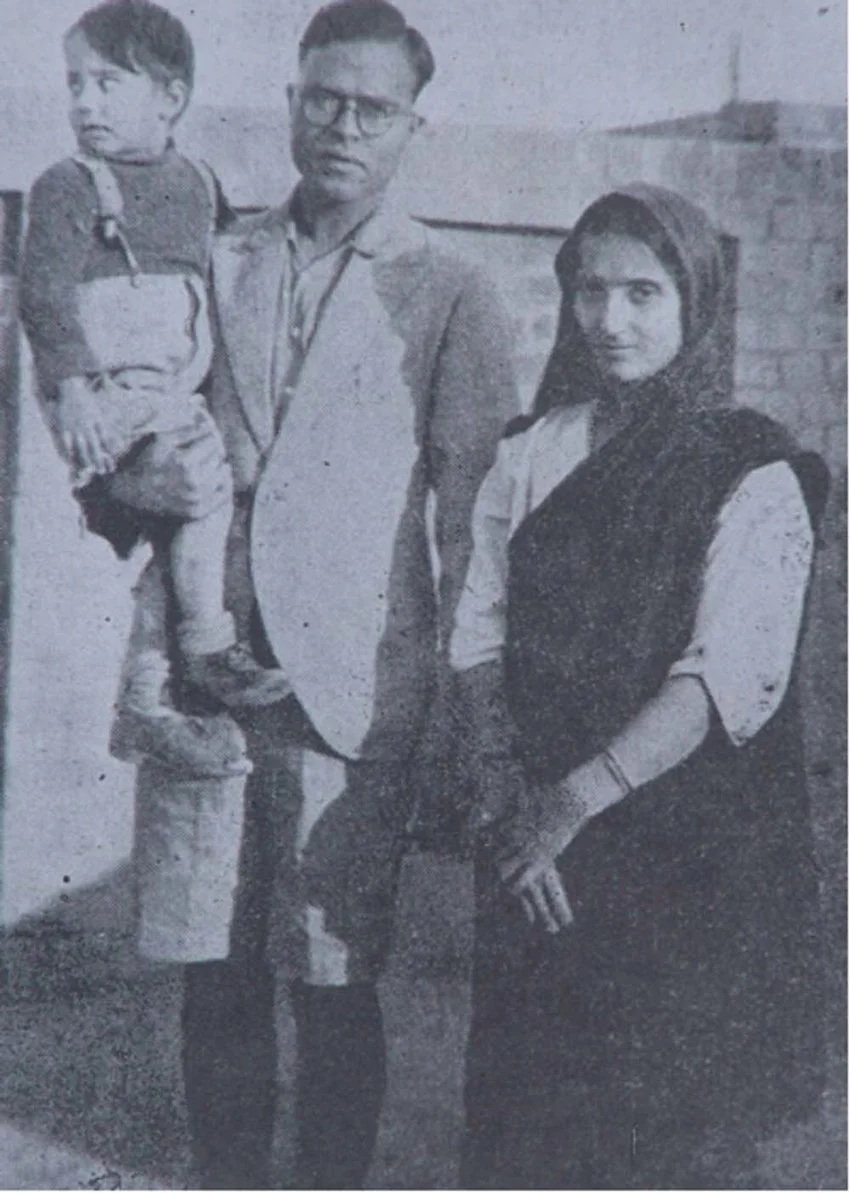
The Vohra family: Bhagwati Charan Vohra, Durga Devi Vohra and their son Sachinanda, c. 1928. Courtesy of the National Archives of India, Comrade Ram Chandra Photograph Collection, S. No. 190, 11. Reproduced in Kama Maclean, “What Durga Bhabhi Did Next,” 2013.
The domestic was not always separate from the political.
Sometimes it was what made the political possible.
Which makes me wonder how many times throughout history women have been called idle simply because their work did not look like work.
How many conversations were dismissed because they happened over tea instead of across a conference table. How many networks were called gossip because nobody had bothered to give them the dignity of words like community, organizing or information exchange.
Aunty, Finally
And maybe that is what bothers me most about the word aunty.
Not that we use it for older women.
But that somewhere along the way, we learned to say it with a smirk.
It wasn’t until I entered my late 20s and started befriending women of all ages around me — especially as an immigrant living in a city with no immediate family — that I found something I had never realized I was even seeking: freedom.
Freedom from the thought that if I failed to have a kid by 32, I was somehow a failure. Freedom from believing that if I chose myself over a partner, or over a man, I would end up all alone.
One of these women just won a Hollywood award for best makeup artist in 2026. Another started her second business this past summer and is one of the most creative souls I have had the chance to know.
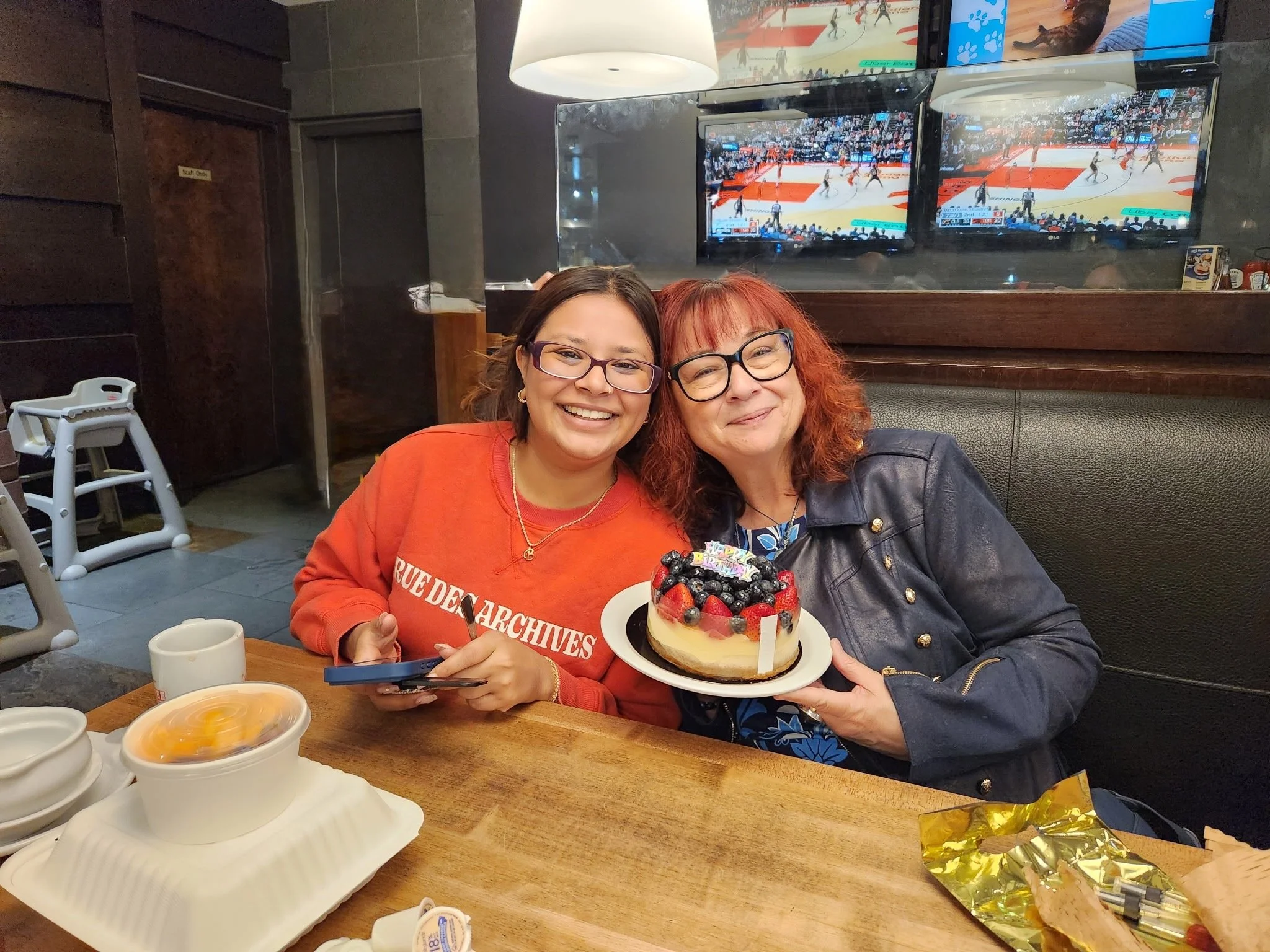
With Beverly Wright, a two-time Lion’s Award winner and, more importantly to me, part of my chosen family in Vancouver. Credits: Bhagyashree Chatterjee
The women I once watched from a distance, peeling peas and talking under the Delhi sun, no longer feel so far away.
Maybe the circle was never something I was supposed to grow out of.
Maybe I was simply growing into it.
And somewhere along the way, I stopped watching from a distance and pulled up a plastic chair.
